
The Ultimate Guide to Metadata for SEO
Reading time: 7 minutes


Metadata for SEO is like the backstage crew of a theater production. You might not see it, but it’s working hard behind the scenes to help your content shine on the search engine stage.
Let’s break it all down—from what metadata actually is to how you can optimize it, what tools make the job easier, and why it matters more than most people realize.
Metadata in SEO refers to the information embedded in your webpage’s code that helps search engines understand and rank your content. It’s not usually visible to users on the page—but it influences what people see in the search results, like the page title, description, and image previews.
There are two main types:
Think of metadata like the labels in a library. You might grab a book because the title looks interesting, or because it’s shelved in the “science fiction” section—those labels? That’s metadata.
So, how does metadata help SEO?
It plays a critical role in:
Good metadata can boost click-through rates (CTR), especially when your meta titles and meta descriptions are optimized to match search intent. A well-crafted title can mean the difference between someone clicking your result versus scrolling past.
The meta title is the blue clickable headline that shows up in Google. It’s also what appears in the browser tab.
To write a strong meta title:
Example: Instead of “SEO Guide”, try “Complete SEO Guide for Beginners: Boost Rankings Fast”
The meta description is the text that appears below the title in search results. It doesn’t directly impact rankings, but it affects clicks—and that can indirectly help rankings.
Formula: [Topic] + [Value] + [Call to action]
Example: “Learn how to use structured data to boost visibility and get rich results in Google. Step-by-step tips inside.”
Title tags are HTML elements that define the title of a webpage. These tags are one of the most important on-page SEO elements.
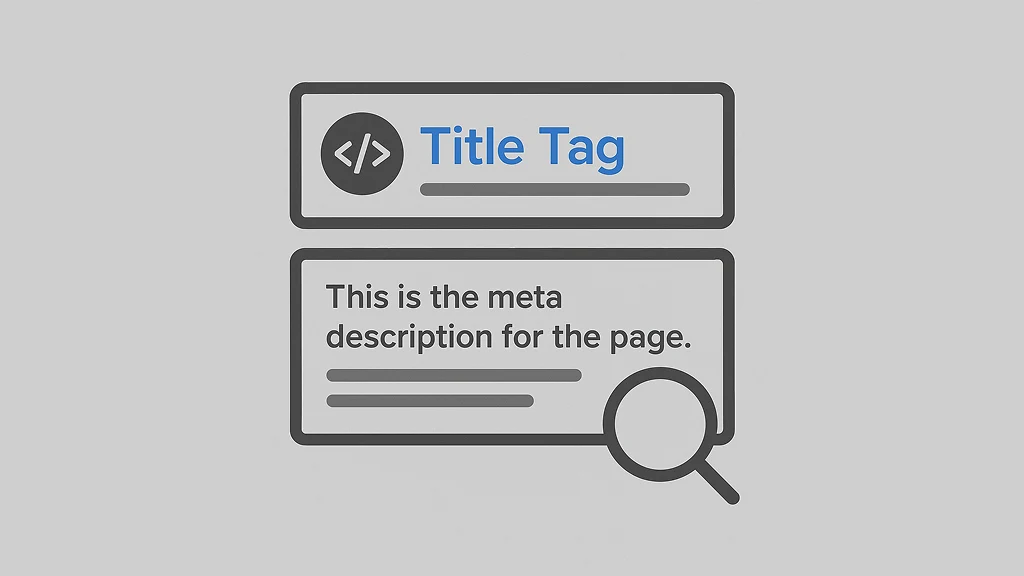
When done right, title tags help search engines and users quickly understand what the page is about.
Image alt text serves two purposes—improving SEO and accessibility.
Best practice: “Woman typing on laptop at desk with SEO charts on screen” is better than “image1.jpg”.
This small detail can boost your image search traffic and support assistive technologies like screen readers.
When you have similar or duplicate content across multiple URLs, canonical tags tell search engines which version is the “master” copy.
<link rel="canonical" href="https://example.com/original-page" />Wondering what is hreflang in SEO?
Hreflang tags tell Google which language and region you’re targeting for each page version. They’re essential for international SEO.
<link rel="alternate" hreflang="fr" href="https://example.com/fr/" />They also help screen readers and accessibility tools know which language they should expect.
Open Graph metadata helps control how your content looks when shared on social media (Facebook, LinkedIn, etc.).
It lets you define:
Structured data uses schema markup to help search engines better understand your content and potentially show rich results.
So, does schema markup help with SEO?
Yes—indirectly. It can increase visibility with review stars, FAQ dropdowns, recipe cards, and more.
Popular types of schema:
Use Schema.org as a reference for formatting.
Your robots.txt file controls which pages search engines can and can’t crawl.
Use it to block:
But be careful—not all bots respect it, and blocking critical content could hurt your SEO.
An XML sitemap acts like a roadmap for search engines, guiding them through your site’s structure.
Include:
Tools like Yoast or RankMath auto-generate sitemaps if you’re on WordPress.
Metadata also boosts accessibility.
Accessible sites aren’t just inclusive—they’re better optimized, too.
Before writing any metadata, start with keyword analysis.
Want to rank for “how to structure metadata for social media”? That phrase should guide both your Open Graph tags and page content.
Managing metadata doesn’t have to be tedious.
Look for tools that offer automation, bulk editing, and schema support.
Use this quick checklist before publishing any page:
Metadata in SEO refers to hidden information in your page’s code that helps search engines understand what the content is about and how to display it in search results.
Start with a clear summary of the page, include your main keyword, and make it compelling enough to click—keep it under 160 characters.
Not every page needs it, but pages like products, reviews, FAQs, and recipes benefit most from structured data and can gain rich snippets.
Hreflang is a tag that tells search engines what language and region a page is targeting, which helps with international and multilingual SEO.
Top tools include RankMath, Yoast SEO, Meta Tag Manager, and Hey Meta—all useful for creating and editing metadata without touching code.
Metadata won’t magically rank your site on its own—but when done right, it supports everything else.
It helps search engines understand your site, it helps users trust and click your content, and it brings structure to your strategy.
Think of it like SEO’s foundation. Quiet, but critical.
Want to learn more? Check out The SEO Documentation Essentials Every Website Needs.
 Creative presentation ideas everyone should know
 Valuable Content: A Practical Checklist
 Search Experience Optimization (SXO): What It Is and Why It Matters
 E-E-A-T: What It Is & Why Does It Matter for SEO
 Content Refresh: What It Is and How to Do It Right