
The SEO Documentation Essentials Every Website Needs
Reading time: 5 minutes


If you’ve ever wondered how to give your website the best chance to shine in Google’s eyes, this one’s for you. Great SEO documentation isn’t just about keywords and backlinks anymore, it’s about setting up your site so search engines understand it, trust it, and want to show it off.
Let’s break down the essentials every website needs to get that sweet, steady flow of organic traffic.
You wouldn’t build a house without blueprints, right? Same deal with your site.
SEO documentation is your blueprint, it helps you (and everyone on your team) understand how your site is optimized, what’s working, and where things might be broken. From URL structure to schema markup to canonical tags and sitemaps, having everything documented means less guesswork and better decision-making.
It also keeps things consistent when multiple people touch your site. Whether it’s developers, marketers, or content writers, everyone’s on the same page.
Ranking high in search engines isn’t luck—it’s structure, strategy, and persistence. To improve your web search ranking, you need a solid technical foundation, great content, and crawlable pages.
Start by making sure your pages are accessible and fast. Optimize your Core Web Vitals. Use semantic HTML. Don’t forget structured data—it helps Google understand your content better.
The goal? Make your site easy to crawl, easy to understand, and worth ranking.
You can’t rank if you’re not indexed. Simple as that.
Always check indexed pages using tools like Google Search Console. Just pop your URL into the “URL Inspection” tool and see what Google sees. You’ll find out if a page is indexed, why it isn’t, and whether there are any crawl issues.
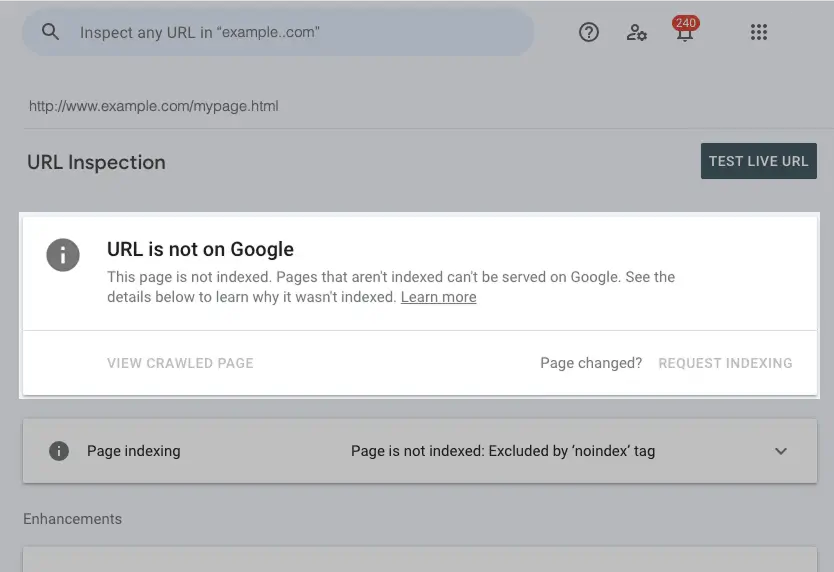
If important pages aren’t indexed, you’ve got a visibility problem and that means lost traffic.
Google doesn’t hand out gold stars, but it does assign quality scores behind the scenes.
Your Google website rating (while not an official term) is influenced by factors like content quality, user engagement, E-E-A-T (Experience, Expertise, Authoritativeness, Trustworthiness), mobile usability, and site speed. All these things tell Google if your site is worth showing to users.
Think of it as a reputation score. Keep it high by offering real value, fast performance, and great UX.
There’s no magic checklist, but there are a few things every site should have:
These SEO essentials help search engines find, understand, and rank your site. Miss one? You might leave traffic on the table.
Ever wonder how search engines actually find your pages?
It’s all thanks to internet crawlers: automated bots that scan your site, follow links, and add content to their index. The easier you make it for them, the better.
Use internal linking. Avoid orphan pages. Keep redirects clean. And don’t block important pages with robots.txt or noindex tags unless you really mean it.
Give crawlers a clear, easy path through your site.
Want to add a site to the Google index from scratch? First, make sure your site has no crawl errors. Then, submit your sitemap through Google Search Console.
You can also promote your content through social media or links from other indexed websites to help get it discovered.
Think of it like waving a little flag that says, “I’m here!”
If you launch a new page and want Google to find it faster, you can submit it to Google for indexing.
Here’s how:
Head over to Google Search Console, enter your page URL into the inspection tool, and click “Request Indexing.” That tells Google’s bots, “Hey, come check this out.”
It’s not instant, but it’s usually quicker than waiting for them to stumble on it.
One of the most overlooked things in SEO? URLs.
Web crawler URL behavior is all about how bots follow and interpret the links on your site. Clean, descriptive URLs make a difference. Avoid long strings of random numbers or parameters unless absolutely necessary.
Also, keep your internal linking tight. Use anchor text that describes the destination. This helps both crawlers and users navigate your site more effectively.
You can absolutely boost your web search ranking by making sure your pages are indexed, paying attention to your Google website rating, and using strategies to expand your reach.
Having clear SEO documentation helps keep it all on track, and mastering the SEO essentials ensures your site is built on a strong foundation.
If internet crawlers can easily move through your site, you can submit a site to Google for indexing or add an article page URL to Google faster. Just make sure your URL structure is clean, logical, and easy to follow.
Let’s be real: SEO isn’t magic. But with the right blueprint, it can feel like it.
Want some extra help? Check out our Small SEO Guide for Beginners to make the process way easier. You’ve got this!
 Creative presentation ideas everyone should know
 Valuable Content: A Practical Checklist
 Search Experience Optimization (SXO): What It Is and Why It Matters
 E-E-A-T: What It Is & Why Does It Matter for SEO
 Content Refresh: What It Is and How to Do It Right